
Categories
Real Estate NewsPublished October 15, 2026
8 Red Flags When Buying a Home in Newport Beach

Original post published at www.cesipagano.com
You’ve finally found it—that stunning beach house on the Balboa Peninsula with the perfect sunset view. It looks like a dream, but in the high-stakes world of Newport Beach luxury real estate, dreams can quickly turn into expensive nightmares if you don’t know what’s hiding beneath the surface.
I’ve seen buyers get blinded by a beautiful kitchen remodel, only to realize later that the foundation is literally shifting toward the Pacific. In 2026, with tighter inventory and more sophisticated sellers, you need a sharp eye and a healthy dose of skepticism before you sign on the dotted line.
We want you to feel confident in your purchase, not like you’re gambling with your life savings. That’s why we’ve put together this guide on the specific warning signs that should make any buyer in Newport Coast or Corona del Mar pause and dig deeper.
What are the common structural red flags in coastal homes?
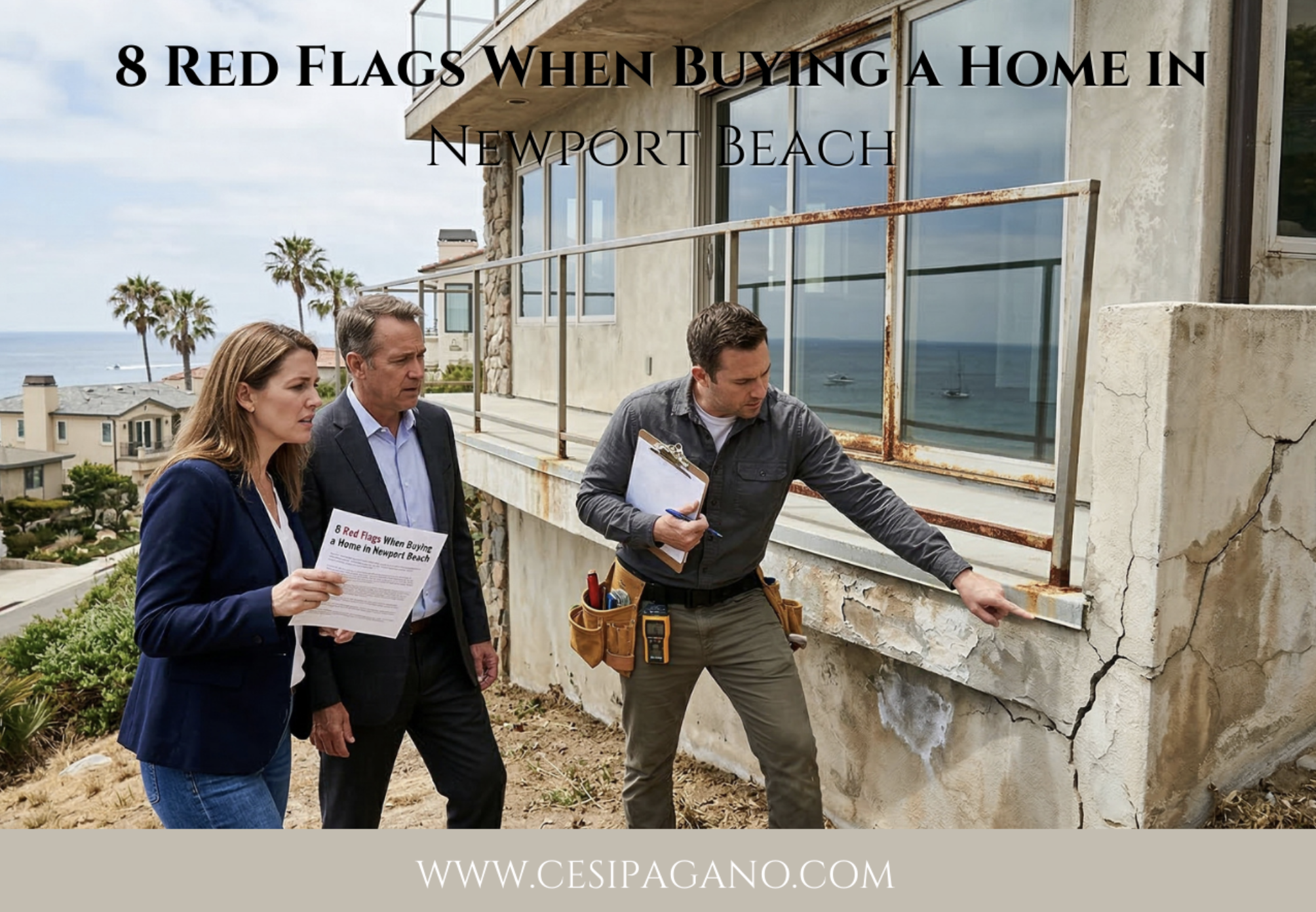
Living by the ocean sounds romantic until you realize that salt air is basically a slow-motion wrecking ball for building materials. One of the biggest red flags is subtle bubbling or peeling paint on the exterior, which often hides significant corrosion of the metal lath behind the stucco.
If you see doors that stick or windows that don’t glide smoothly in a Newport Island cottage, it’s rarely just because of the humidity. It’s often a sign that the sandy soil underneath has settled unevenly, which can cost six figures to stabilize correctly.
You also need to look closely at any exposed metal, like deck railings or hardware. If they are heavily rusted, it’s a good bet the HVAC system and internal plumbing have been taking a beating from the salt air too.
The Hidden Danger of Unpermitted Upgrades
Newport Beach is full of gorgeous renovations, but if the seller can’t produce permits for that sleek new guest suite, you’re looking at a major red flag. Unpermitted work is a ticking time bomb for your insurance and future resale value.
We’ve had clients discover that a previous owner “expanded” a patio right into a protected setback. When the city finds out, you’re the one who has to pay to tear it down, and trust me, the California Coastal Commission doesn’t play games with property lines.

Why should I worry about a home that has been on the market for 90+ days?
In a market as hot as Shady Canyon or Nellie Gail Ranch, a home that sits for three months usually has a “secret” that other buyers have already figured out. It might be an unreasonable seller, but more often, it’s a physical defect found during a previous inspection that wasn’t disclosed.
You want to ask your agent for the “history” of the listing. If it’s fallen out of escrow multiple times, that’s a massive warning sign that there’s something wrong with the title, the structure, or the neighbors.
Sometimes the red flag isn’t the house at all, but a massive development project planned for the lot next door that will kill your ocean view. We use our Concierge Service to research upcoming city council agendas so you aren’t blindsided by a new three-story wall blocking your sunset.
Water Intrusion and Mold: The Silent Killers
If you walk into a beautifully staged home in West Newport and smell an overwhelming scent of vanilla candles, be wary. Sellers often use heavy scents to mask the musty odor of a recurring mold problem caused by poor drainage or a leaky roof.
Look for fresh paint that only covers one wall or a specific section of the ceiling. It’s a common tactic to hide water stains right before an open house, especially after our heavy 2026 winter rains.
How do I spot issues with the seawall or bluff stability?
If you’re buying on the water, the seawall is arguably more important than the house itself. A failing seawall can cost hundreds of thousands of dollars to repair and requires a permit process that can take years.
Check for large cracks or “weeping” holes where soil is clearly washing out from behind the wall. If the property is on a bluff in Crystal Cove, look for signs of “slumping” in the backyard or cracks in the pool deck, which could indicate the land is moving.
We always recommend a specialized geological inspection for these properties. It’s an extra cost, but it’s the only way to know if you’re buying a stable home or a liability that the next big storm might take out.
Is a low price in a high-end neighborhood actually a red flag?
If a home in Newport Coast is priced significantly below its neighbors, it’s almost never a “deal” born out of the seller’s generosity. In the 2026 market, AI-driven valuations are too accurate for professional sellers to miss the mark by that much.
A “bargain” price usually means the home has reached the end of its functional life, or it has a “clouded” title that makes getting a mortgage nearly impossible. You’re likely looking at a “scrape” where the value is entirely in the land, and the house is just a liability you’ll have to pay to remove.
This is where our Safe Seller Program comes into play from the other side. We know exactly what a “clean” listing looks like, so we can spot when a competitor is trying to dump a problematic property on an unsuspecting buyer.
The Red Flag of an Incomplete Disclosure Package
In California, sellers are legally required to tell you everything they know about the home’s history. If the disclosure package is thin or full of “I don’t know” answers for a home they’ve lived in for twenty years, that’s a red flag.
We look for gaps in the repair history. If the roof is twenty years old but they claim there have never been leaks, we start looking for those hidden water stains I mentioned earlier. Trusting but verifying is how you stay safe in this market.
What should I look for in the surrounding neighborhood?
You aren’t just buying a house; you’re buying into a community. A major red flag is a high number of “For Lease” signs on the street or several homes that look neglected. This often signals a decline in the neighborhood’s pride of ownership, which will drag your property value down eventually.
Check for “deferred maintenance” in the common areas if you’re looking at a condo or a gated community. If the HOA’s reserves are low and the clubhouse looks shabby, you can bet a “special assessment” is coming soon to your mailbox.
We also advise checking the Newport Beach Planning Division for any major infrastructure projects. That quiet street might be slated to become a major detour route for a two-year bridge project starting next month.
How can I protect myself when buying in Newport Beach?
The best way to avoid these red flags is to work with a team that has been through every market cycle since the 80s. We’ve seen the “lipstick on a pig” flips and the crumbling bluffs, and we know exactly which inspectors to call to get the real story.
Our goal is to make sure you’re the one in control of the transaction. We use the Cesi Edge to negotiate credits for any issues we find, ensuring that your new Newport Beach home is a sanctuary, not a source of stress.
Buying a home here should be an exciting milestone, not a lesson in architectural failure. Let us do the dirty work of vetting the property so you can focus on where you’re going to put your surfboard.

Cesi Pagano, DRE# 01043716
FOUNDER/CEO/OPERATOR | Cesi Pagano & Associates | Keller Williams | PLACE
or another way